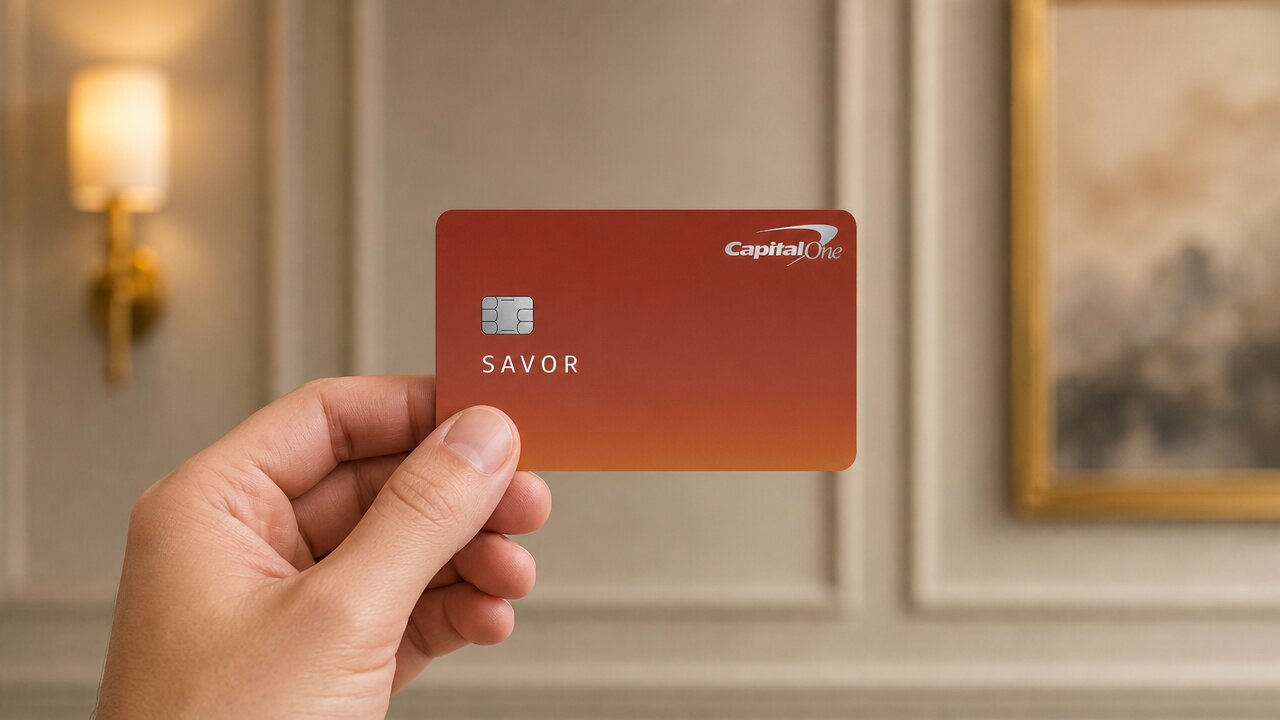
If a big chunk of your money disappears into restaurant tabs, grocery runs, and a stack of streaming subscriptions, the Savor rewards card from Capital One is built almost exactly for your spending. The card — branded for years as the SavorOne and now simply called Savor — pays a flat 3% cash back on dining, groceries, and streaming, charges no annual fee, and hands new cardholders a $200 cash bonus for clearing a low spending hurdle. That combination is the whole pitch, and for the right person it's a genuinely good one. This savor credit card review breaks down what you actually earn, where the card falls short, and whether the savorone rewards are worth a slot in your wallet.
What the Savor Rewards Card Actually Earns
The savor one cash back structure is refreshingly simple compared to cards that rotate categories every quarter. You earn an unlimited 3% back in three everyday buckets: dining (restaurants, bars, fast food, and food delivery), grocery stores, and popular streaming services like Netflix, Spotify, and Disney+. There are no caps and no sign-up dance to "activate" the categories — the 3% just lands automatically.
A quick but important footnote on groceries: the bonus applies to actual grocery stores, not superstores like Walmart and Target. Those big-box retailers code as general merchandise, so a grocery run there earns the base 1%, not 3%. If a meaningful share of your food budget goes through a warehouse club or a superstore, the math changes. We get into why that happens in our breakdown of how merchant category codes decide which purchases earn bonus cash — it's the single most common reason people quietly miss out on rewards they think they're earning.
Beyond the headline categories, the Savor card layers on a couple of travel perks. You get 5% cash back on hotels, vacation rentals, and rental cars booked through Capital One Travel, plus 8% back on tickets purchased through Capital One Entertainment. Everything else — gas, utilities, that hardware store run — earns an unlimited 1%. There's no annual fee and no foreign transaction fee, so the card costs nothing to hold and won't ding you 3% on purchases abroad.
Put real numbers on it. If you spend $600 a month on dining and groceries combined and another $40 on streaming, that's roughly $23 a month in cash back, or about $276 a year — from a card that costs $0 to keep. The savorone rewards aren't going to fund a vacation on their own, but as a no-fee card that pays you back on spending you'd do anyway, it quietly stacks up.
The $200 Bonus, the "$500 Bonus" Confusion, and the Fine Print
Here's where it pays to be precise, because a lot of people search for the $500 bonus and walk away with the wrong number. There is no $500 bonus. The $500 is the spending requirement, not the reward. The actual welcome offer is a one-time $200 cash bonus once you spend $500 on purchases within the first three months of opening the account.
That's still a strong, easy-to-hit offer. Spending $500 over three months works out to about $167 a month — for most households, that's just normal grocery and restaurant spending, not stretching to manufacture purchases you don't need. A $200 return on $500 of everyday spend is an effective 40% back in those first three months, which is excellent for a no-fee card. If you want the deeper logic on how welcome offers are structured and when chasing one actually makes sense, the guide to the real strategy behind credit card sign-up bonuses walks through the trade-offs.
The Savor card also comes with a 0% intro APR for the first 12 months on purchases, after which a variable APR kicks in — currently around 23.49%, though your exact rate depends on your credit. That intro window can be useful if you have a planned large purchase you want to pay down over a year interest-free. But treat it as a tool, not a license. If you carry a balance past the promo period, the interest you'll pay at 20%-plus dwarfs any 3% cash back you earn. A rewards card only rewards you if you pay the statement in full every month; otherwise the bank is the one collecting.
Capital One Student Savor and Who the Card Fits
Capital One offers a near-identical version aimed at people building credit from scratch. The capital one student savor card carries the same $0 annual fee and the same 3% on dining, groceries, and streaming, but with a more approachable welcome offer — a one-time $50 cash bonus after spending $100 in the first three months. The spending hurdle is low on purpose: it's designed for a college student or first-time cardholder who isn't running thousands of dollars through a card each month.
For a student, the appeal isn't the bonus so much as the on-ramp. You get a real rewards card that reports to all three credit bureaus, earns competitive cash back on the categories students actually spend in (takeout and Spotify, mostly), and doesn't charge an annual fee while you build history. If you're weighing your first card more broadly, the roundup of the best starter credit cards for 2026 puts the student Savor in context against the other no-fee options.
Who is the standard Savor one credit card best for? Anyone whose spending tilts heavily toward food and entertainment, who wants flat-rate simplicity over rotating categories, and who pays their balance in full. It's also a strong "second card" — pair it with a flat 2% card for everything outside the bonus categories, and you've covered most of your spending at 2-3% with almost no effort.
Who should look elsewhere? If your biggest expenses are gas, travel, or warehouse-club groceries, the 1% base rate on those purchases leaves money on the table, and a different card will serve you better. And if you're chasing a single jaw-dropping welcome bonus, plenty of cards offer larger upfront hauls — though usually with annual fees and steeper spending requirements attached.
Should You Get the Savor Card?
The honest verdict: the Capital One Savor is one of the easiest no-fee cash back cards to recommend for the right spender. Three percent on dining, groceries, and streaming with no cap, no annual fee, and a $200 bonus that most people can earn on autopilot is a clean, low-maintenance deal. The savor one cash back won't make you rich, but it pays you for spending you're already doing, and it costs nothing to hold year after year.
The smartest move is to check your last two or three months of statements before you apply. Add up what you actually spend on restaurants, groceries, and streaming. If those categories dominate, the Savor card earns its keep immediately. If they don't, use that same exercise to find the card whose bonus categories match where your money really goes — that's the whole game with cash back, and it's worth ten minutes to get right.