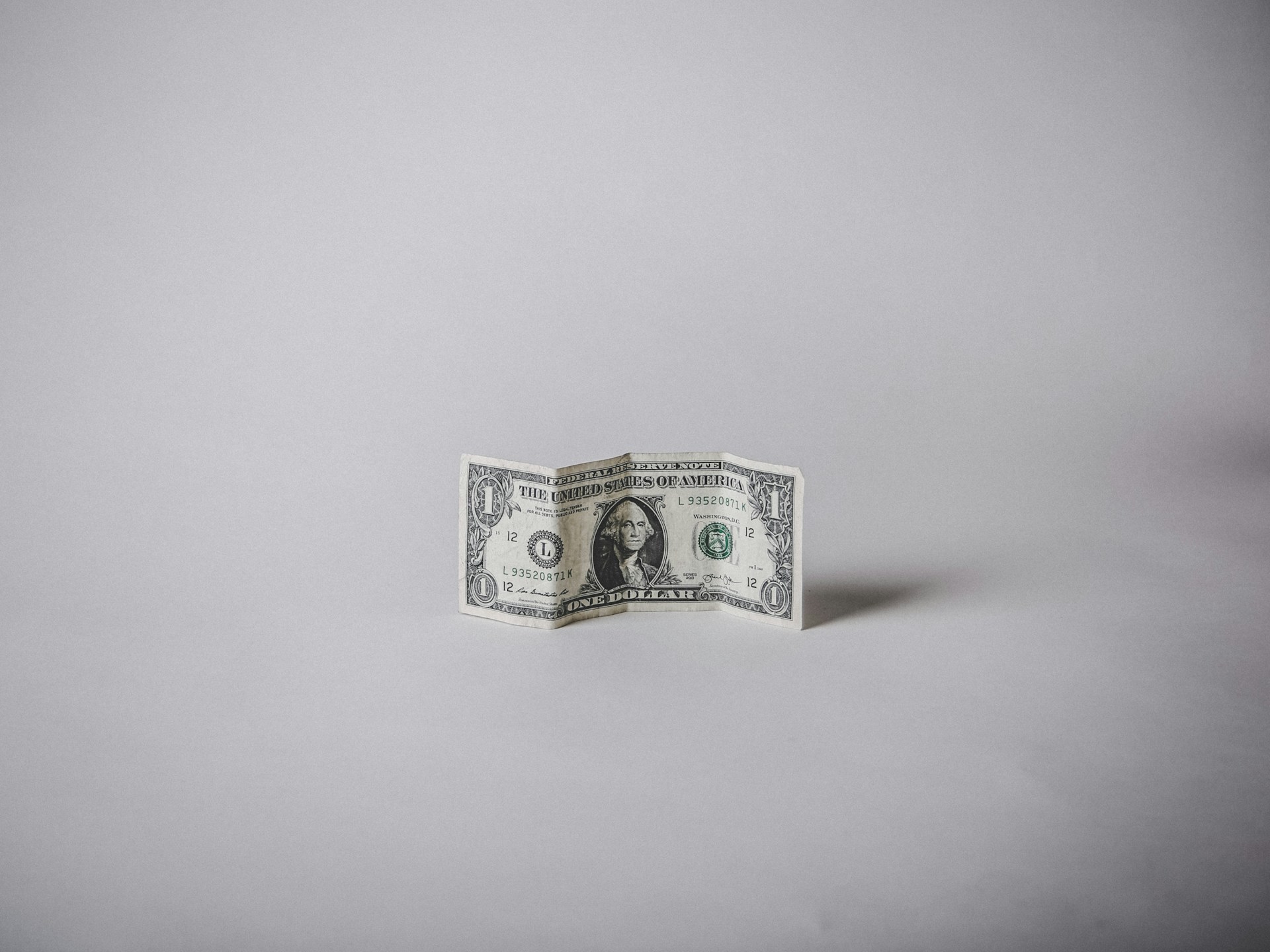
The most expensive investing myth is that you need a pile of cash to begin. People wait — for the raise, the bonus, the "someday" when they'll have enough — and the years they lose are the ones that mattered most. In 2026 you can open a brokerage account and buy a slice of the entire S&P 500 with a single dollar. The barrier isn't money anymore. It's starting.
Here's exactly how to begin investing with little money, what to buy, and the traps that quietly drain small accounts.
First, the One Thing to Do Before Investing
Investing money you might need next month is a setup for forced selling at the worst time. Before you put a dollar in the market, park a small cushion in a high-yield savings account — ideally building toward three to six months of expenses, but even a starter $500–$1,000 buffer helps.
The rule of thumb: money you'll need within five years doesn't belong in stocks. Money you won't touch for longer does. Once you've got a small safety net, the rest can go to work.
Fractional Shares Changed the Math
The reason "little money" is no longer a barrier is fractional shares — the ability to buy a piece of a share instead of a whole one.
A single share of an S&P 500 ETF like VOO costs over $500. A decade ago, that meant you needed $500 just to buy one. Today, brokerages let you buy $25 worth — about 1/20th of a share — and you own that fraction outright, growing right alongside the full share. With $1 and a fund priced at $50, you'd own 1/50th of a share.
This quietly solves the biggest beginner problem: you no longer have to save up for months before you can buy anything. You invest what you have, when you have it.
What to Actually Buy
When you're starting small, simple beats clever. Three beginner-friendly options, roughly in order of ease:
1. A broad index fund or ETF. An index fund holds hundreds or thousands of companies at once, so a single purchase makes you diversified instantly. An S&P 500 fund gives you a slice of the 500 largest U.S. companies. Many have no minimum and no management fee — Fidelity's ZERO funds (FNILX, FZROX) charge 0%, and Schwab's SWPPX and Vanguard's VOO are dirt cheap. This is the workhorse of a small portfolio.
2. A target-date fund. Pick the one closest to the year you'll retire (like "Target 2060") and it holds a diversified mix that automatically gets more conservative as you age. One fund, zero maintenance.
3. Individual stocks — sparingly. It's fine to buy a fractional share of a company you believe in, but keep single stocks to a small slice of your money. One company can drop 30% on bad news; an index fund holding hundreds rarely does.
What to mostly avoid early on: individual stock-picking with money you can't afford to lose, anything promising guaranteed high returns, and crypto as a "strategy." Build the boring core first.
The Habit That Matters More Than the Amount
Here's the part that does the real work — and it's not the size of your first deposit. It's consistency.
Setting up an automatic transfer — say $50 or $100 every payday into the same index fund — is a strategy called dollar-cost averaging. You buy on a fixed schedule no matter what the market is doing. When prices are high, your $100 buys a little less; when they're low, it buys more. It removes the emotion and the impossible task of timing the market, and it turns investing into a background habit instead of a decision you have to make every month.
Why does consistency beat amount? Because of compounding — your returns earning their own returns over time. As we break down in the math behind wealth, $10,000 left to grow at 7% becomes about $76,000 in 30 years untouched. But you don't need $10,000 up front. $100 a month, invested steadily at 7%, grows to well over $100,000 across three decades — and most of that final number is growth, not the money you put in. The engine is time, and small early contributions get the most of it.
A Simple 20-Minute Start
You can be invested today:
- Open a brokerage account at Fidelity, Schwab, or Vanguard. No fees, no minimum, about 10 minutes.
- Link your bank and move over whatever you can spare — $25 is fine.
- Buy a broad index fund — an S&P 500 or total-market fund. Use the dollar amount, not share count, so fractional shares kick in.
- Set up an automatic monthly transfer, even a small one.
- Then leave it alone. Checking daily is the fastest way to talk yourself into a bad decision.
The Real Takeaway
You don't need to be rich to invest. You need an account, a low-cost index fund, an automatic transfer, and patience. The person who starts with $50 a month today will almost always end up ahead of the one who waits years for the "right" amount — not because they were smarter, but because they gave their money more time to grow.
Start small, start automatic, and let the years do what they do best.