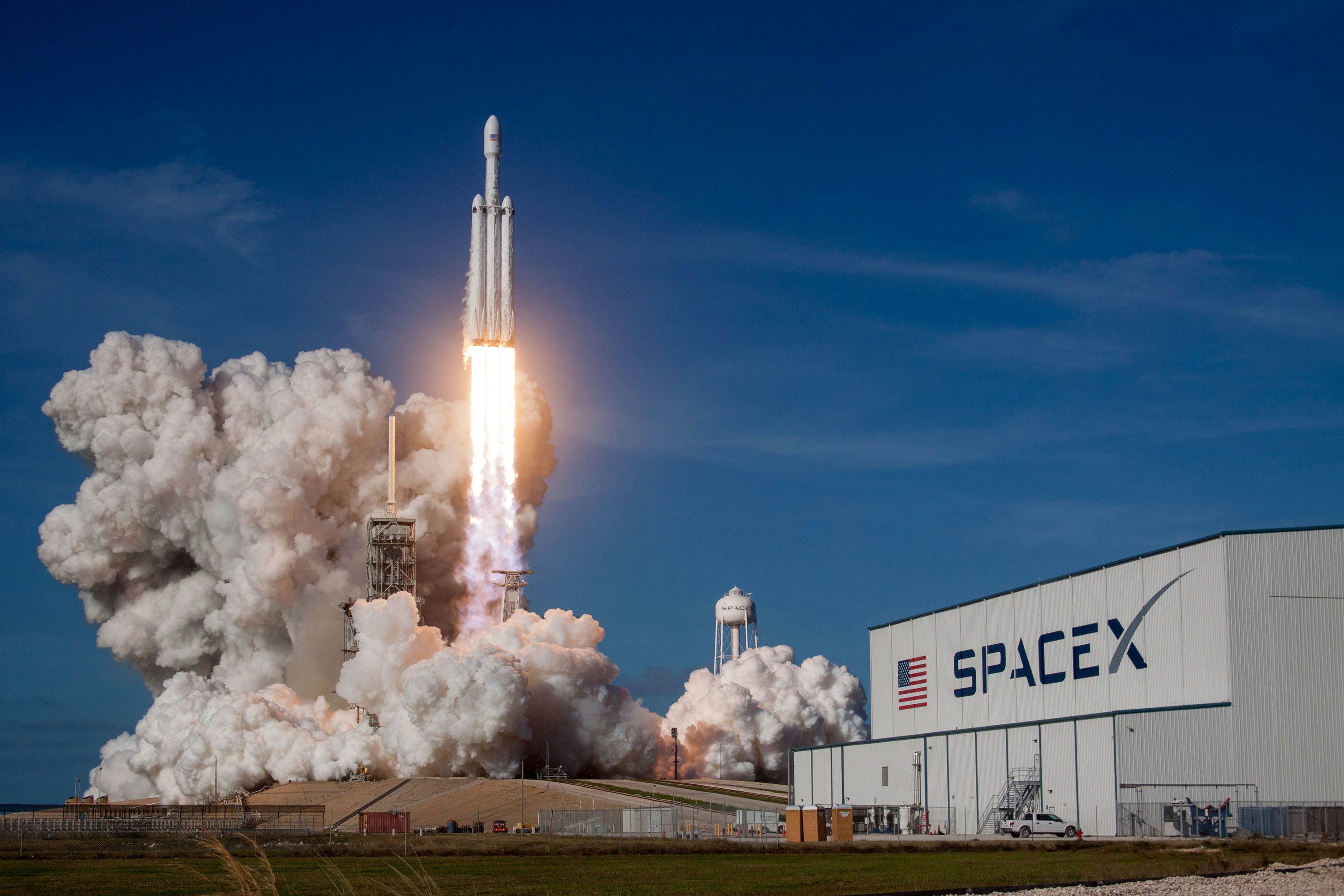
For years, investing in SpaceX was the ultimate financial holy grail—an exclusive playground reserved for Silicon Valley venture royalty, sovereign wealth funds, and ultra-high-net-worth individuals trading blocks of private shares on opaque secondary markets. If you weren't a billionaire or a top-tier institutional fund manager, your chances of owning a piece of Elon Musk’s aerospace empire were effectively zero.
That is about to change.
Following a series of quiet corporate consolidations—most notably the February 2026 mega-merger with xAI—and intense speculation, SpaceX’s S-1 registration statement was officially made public by the SEC on May 20, 2026. Wall Street is currently preparing for what will undoubtedly be the largest, loudest, and most heavily scrutinized initial public offering (IPO) in financial history. This isn't just an aerospace listing; the entity going public under the ticker SPCX is a sprawling, high-concept conglomerate spanning reusable rockets, a global satellite internet monopoly, and the heavy-compute infrastructure of artificial intelligence.
For long-term retail investors, this upcoming debut presents a generational crossroad. Is this a rare opportunity to buy into a defining asset of the 21st century at the public ground floor, or is it a hyper-hyped financial vehicle engineered primarily to fund massive AI capital expenditures?
The Launch Window: When is the SpaceX IPO?
According to the newly public S-1 filing and institutional roadshow briefs, SpaceX is targeting a public debut on June 12, 2026.
While the exact "bell-ringing" date remains fluid depending on final SEC clearance and macroeconomic conditions, the underwriting machinery—led by Goldman Sachs alongside 20 other banks—is already moving at terminal velocity. The formal institutional roadshow is expected to kick off in the first week of June. For retail investors looking to participate, the window to prepare capital accounts is closing fast, with underwriters reportedly allocating a massive 30% of the float directly to retail.
Valuation and the Float: Sizing Up a Leviathan
The numbers attached to the SpaceX listing are, quite literally, astronomical. Recent reports indicate the company is seeking an initial public valuation between 1.8 trillion.
To put that in perspective:
- SpaceX will instantly debut as one of the most valuable companies on Earth, eclipsing corporate giants like Amazon and Meta, and trailing only the multi-trillion-dollar trio of Apple, Microsoft, and Nvidia.
- The company aims to raise between 80 billion in fresh capital, easily dwarfing Saudi Aramco’s $29 billion record set in 2019.
- This massive float will require an immense amount of market liquidity to absorb.
A capital raise of this magnitude creates unique gravity on Wall Street. Because passive indexes and mega-cap mutual funds will be structurally forced to rebalance their portfolios to make room for an asset of this size, analysts anticipate a temporary liquidity drain across the broader tech sector. The S-1 also revealed a pre-IPO 5-for-1 stock split executed on May 4, 2026, aimed at making shares more accessible to the incoming flood of retail demand.
What Are You Actually Buying? The Financial Reality
When you buy a share of ticker symbol SPCX, you aren’t just funding a trip to Mars. You are buying a deeply complex corporate puzzle that generated **4.94 billion.
The Cash Cow: Starlink
Starlink is the undisputed engine of the company’s current revenues. In 2025, the satellite broadband provider generated 4.4 billion. It owns the deepest operational moat in the tech world, boasting over 10 million active subscribers and launching over 90% of all Western payloads into space via SpaceX's reusable Falcon fleet.
The Cash Burn: xAI and The Data Centers
Here is where the financial narrative gets messy. In February 2026, SpaceX formally merged with Musk's xAI. While Starlink is wildly profitable, the AI operations are incredibly expensive. SpaceX disclosed that xAI posted losses exceeding 2.5 billion in Q1 2026 alone, driving SpaceX to a staggering overall net loss of 41.3 billion.
To improve the financial optics and monetize this heavy infrastructure, SpaceX recently secured a massive deal to rent a portion of its "Colossus" supercomputing power to Anthropic for an estimated $1.25 billion per month through May 2029. It’s a powerful revenue stream designed to offset costs, but long-term investors must weigh Starlink's brilliant margins against AI's terrifying capital expenditure requirements.
The Governance Trap: Capital Without Control
For personal finance investors focused on risk management, the most glaring red flags aren't on the balance sheet—they are in the corporate bylaws. The SpaceX IPO prospectus outlines what corporate governance experts call one of the most management-favorable regimes ever brought to public markets.
- The Dual-Class Share Structure: The public will buy Class A shares, which carry one vote per share. Musk and core insiders will retain Class B shares, carrying ten votes per share. Mathematically, Musk will control 85% of the voting power while owning roughly 42% of the equity.
- The "Unfireable" CEO: Under the proposed framework, Musk will effectively control the outcome of matters requiring shareholder approval, including the election of a majority of the board. He would essentially have to vote to fire himself.
- Mandatory Arbitration: In a highly controversial move, SpaceX intends to force shareholders to resolve federal securities claims through binding arbitration, effectively eliminating the possibility of shareholder class-action lawsuits.
Who Can Invest and How?
Historically, if you wanted a piece of SpaceX, you needed to be an accredited investor utilizing secondary platforms like Forge Global or EquityZen, where private shares recently cleared at premium pricing (anchored by a $421 pre-split valuation in December 2025). Alternatively, retail investors had to buy into closed-end mutual funds like Baillie Gifford’s Scottish Mortgage Trust.
When the mid-June IPO lands, anyone with a standard brokerage account can invest. Because a capital raise of up to $80 billion is too massive for institutional banks to swallow alone, underwriting syndicates have intentionally allocated an unprecedented 30% tranche of the IPO directly to retail brokerages. Wall Street needs the everyday investor to absorb this historic float.
Smart Plays for Long-Term Investors
If you are a long-term investor rather than a momentum day trader, navigating the hype of the SpaceX IPO requires an analytical ice bath.
1. Avoid the Day-One Feeding Frenzy
History shows that mega-cap tech IPOs with immense cultural hype almost always experience extreme day-one volatility. Institutional flippers love to drive the price up in early hours, leaving retail buyers holding the bag when the stock cools down weeks later. Consider the historical trajectory of Facebook or even Musk's own Tesla debut—patience usually yields a better entry price.
2. Look Beyond the "Mars Multiples"
At a 1.8 trillion valuation, SpaceX is trading at a massive premium to its $18.7 billion 2025 revenue. That is a multiple reserved for flawless execution. If you decide to buy, size your position based on the reality that you are buying a capital-intensive aerospace and AI company priced for perfection.
3. Embrace Dollar-Cost Averaging (DCA)
Instead of deploying your entire available capital at the opening bell, split your intended investment into multiple tranches spread out over six months. This mitigates the risk of buying at the absolute peak of the IPO cycle and allows you to absorb the macro market fluctuations that will inevitably hit the tech sector this summer.
The Bottom Line
The SpaceX IPO is a cultural phenomenon masquerading as an equity listing. It offers unprecedented access to a business that completely dominates the modern space economy and commands the frontier of artificial intelligence.
But it demands a steep price: your voting rights, your legal recourse in the event of corporate malfeasance, and a massive valuation premium. If you believe in the ecosystem Musk is building and can tolerate a long, volatile horizon, it may deserve a small, disciplined corner of your portfolio. Just leave your romantic notions about Mars at the door and read the math clearly before you buy.